
- Science
- August 4, 2026
Beyond the Threshold: What the Uppsala Study Proves About Methylene Blue and Chronic Neuropathic Pain
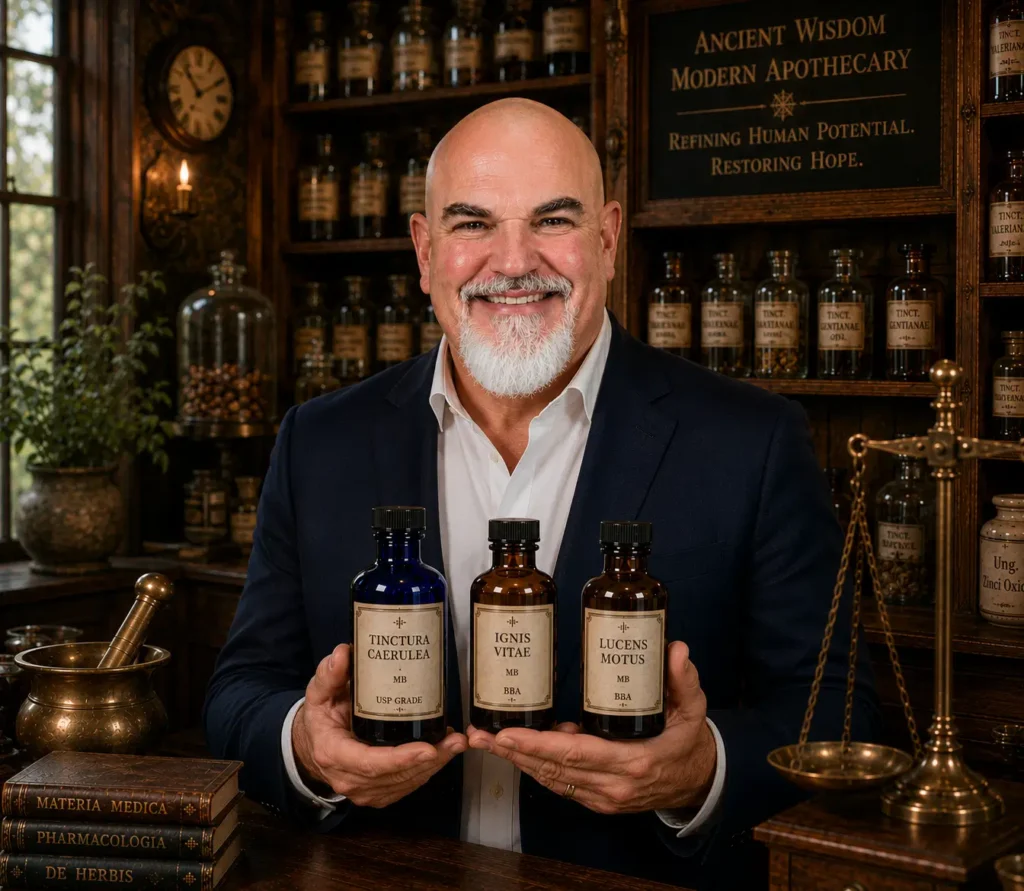
Chronic neuropathic pain is a relentless adversary. For millions of individuals, standard pharmacological interventions: gabapentinoids, antidepressants, opioids, and topical patches: fail to move the needle. Patients walk through medical doors having exhausted every conventional protocol, left stranded with therapy-resistant nerve pain that dictates their every waking moment.
As a former Navy Corpsman known as “DOC,” I have spent decades studying how the human body breaks down under extreme stress, trauma, and cellular exhaustion. When conventional medicine hits a brick wall, we have to look deeper. We have to examine the cellular machinery governing neural signaling.
That is why the landmark clinical study conducted at the Multidisciplinary Pain Clinic at Uppsala University Hospital in Sweden by Miclescu, Svahn, and Gordh (*PMC4509536*) represents a massive paradigm shift. Published in the *Journal of Pain Research*, this double-blind, controlled study evaluated systemic intravenous methylene blue in patients with severe, chronic refractory neuropathic pain.
The findings confirm what biohackers and cellular architects have suspected for years: when deployed with absolute purity and precision, methylene blue is not just a historical dye. It is a potent neurometabolic modulator capable of rewriting the rules of pain relief.
The Root Problem: Nitric Oxide and Neural Hyperexcitability
To understand why intravenous methylene blue works where other drugs fail, we have to look at the chemistry of nerve injury.
Following chronic nerve trauma, plasma and spinal levels of nitric oxide (NO) skyrocket compared to healthy individuals. Nitric oxide acts as an intercellular signaling molecule, but in excess, it fuels neuroinflammation and drives the pathological hyperexcitability of spinal cord dorsal horn neurons.
When N-methyl-D-aspartate (NMDA) receptors in the dorsal horn become chronically activated, calcium conductance surges. This activates nitric oxide synthase (NOS), locking the nervous system into a continuous loop of pain and mechanical allodynia: where light touch or clothing brushing against the skin feels like fire.
What the Uppsala Study Proves: Clinical Findings That Matter
The Uppsala University Hospital trial was rigorous. Ten patients with severe, chronic refractory neuropathic pain: individuals who had failed at least four major classes of pain medications for over a year: were randomized to receive either an active intravenous infusion of methylene blue (2 mg/kg) or a low-dose control infusion (0.02 mg/kg) over 60 minutes.
The clinical results were striking:
Rapid Pain Reduction: Patients in the active methylene blue group experienced a statistically significant decrease in Numerical Rating Scale (NRS) pain scores of more than 30% compared to baseline.
Sustained Relief: Statistically significant pain reduction persisted not only on the day of the infusion (P = 0.04) but carried strongly into the second day (P = 0.008).
Reversal of Allodynia: Among patients suffering from debilitating dynamic mechanical allodynia (pain triggered by light touch), objective clinical testing revealed a measurable reduction in the physical area of tactile allodynia.
The Purity Imperative: Why USP-Grade Standards Are Non-Negotiable
There is a critical caveat in the Miclescu et al. study that every serious biohacker and wellness advocate must understand.
While the clinical trial demonstrated profound analgesic and antioxidant benefits, the authors noted that minor adverse effects (such as transient nausea or abdominal discomfort) can occur. More importantly, pharmaceutical science highlights a dangerous truth about commercial sourcing: standard industrial or chemical grades of methylene blue are contaminated with heavy metals.
Non-USP grades frequently contain toxic residues of arsenic, lead, mercury, cadmium, and aluminum. When administered at therapeutic doses, these heavy metal impurities act as bioactive toxins, clouding clinical outcomes and introducing unnecessary physiological stress.

Connecting the Protocol: Education, Rigor, and Longevity
Optimizing human performance at the cellular level requires more than taking a supplement: it requires a disciplined, educational approach to your biology. Whether you are exploring advanced metabolic resilience through platforms like NCI University or investigating integrative regenerative protocols at Advanced Rejuvenation, the guiding principle remains identical: respect the biochemistry.
Methylene blue is not a quick-fix stimulant. It is a mitochondrial electron recycler, a potent antioxidant, and a targeted NOS inhibitor that supports cellular energy production (ATP synthesis) within the electron transport chain. When paired with proper lifestyle protocols, clean nutrition, and rigorous dosing, it unlocks sustainable cognitive clarity and metabolic longevity.
Wake Up The Big Blue Brain
The Uppsala study is a milestone for clinical neuroscience. It proves that refractory neuropathic pain: long considered an impossible puzzle by conventional medicine: can be managed by targeting the foundational nitric oxide pathways of the nervous system.
We are not here to sell you temporary comfort. We are here to provide the clinical logic, the uncompromising purity, and the structural transparency required to refine human potential at the cellular level.
Examine the science. Demand absolute purity.
Wake up your big blue brain.

Jerry D Fulwider, Jr.
*Product Architect & Formulator (DOC)*
Big Blue Brain LLC